Math is often viewed as a subject confined to classrooms, textbooks, and exams.
However, if we take a moment to look around, we can see that mathematics is woven into the very fabric of our daily lives.
From the way we navigate our routines to how we engage with the world around us, math is indeed everywhere.
It serves not only as a tool for problem-solving but also as a language that helps us understand our experiences and surroundings.
Consider the simple act of cooking. When you follow a recipe, you’re engaging with math without even realizing it. Measurements, proportions, and cooking times all rely on mathematical principles. If you decide to double a recipe or adjust it for fewer servings, you’re applying ratios and fractions. This process not only ensures that your dish turns out well but also invites a sense of creativity and exploration in the kitchen. The art of cooking becomes a delightful dance with numbers, transforming the mundane into something extraordinary.
As we step outside, the world continues to reveal its mathematical underpinnings. Think about the architecture that surrounds us. Buildings, bridges, and parks are designed using geometric principles. The angles, shapes, and structures we admire are the result of careful calculations that ensure safety and stability. When you gaze at a beautifully designed space, you’re witnessing the harmony of math and art merging to create an inviting environment.
Traveling through our cities, we encounter another layer of math in the form of navigation. Whether you’re driving, walking, or cycling, understanding distance, speed, and time becomes essential. GPS technology, which many of us rely on, uses complex mathematical algorithms to calculate the best routes. The next time you find yourself seamlessly directed to your destination, take a moment to appreciate the intricate math working behind the scenes, guiding you effortlessly along your journey.
In our personal lives, math also plays a significant role in managing finances. Budgeting, saving, and investing all require a basic understanding of arithmetic and percentages. When you track your expenses or plan for future purchases, you’re engaging in mathematical thinking. This practice not only helps you maintain financial stability but also empowers you to make informed decisions about your resources. A little bit of math can lead to a greater sense of control and peace in your financial life.
Even in our conversations and interactions, math subtly influences our communication. The concept of statistics often surfaces in discussions about trends, preferences, and behaviors. When we analyze data—be it regarding social media usage, health statistics, or market trends—we’re employing mathematical reasoning. Understanding these numbers can provide valuable insights, helping us navigate the complexities of modern life with more awareness and understanding.
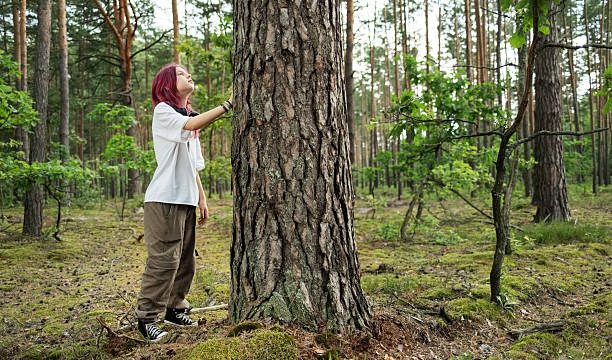
The natural world, too, is a testament to the omnipresence of math. Nature’s patterns, such as the symmetry of leaves, the spiral of seashells, and the fractals of snowflakes, all exhibit mathematical principles. Fibonacci sequences and golden ratios can be found in various life forms, reminding us of the intricate connections between math and the environment. Observing these natural phenomena can foster a deeper appreciation for the beauty that surrounds us, enhancing our connection to the world.
As we delve deeper into the universe, we uncover even more examples of math at work. The movements of celestial bodies, the formation of galaxies, and the behavior of particles all adhere to mathematical laws. Scientists and astronomers use equations to describe and predict these phenomena, allowing us to understand the cosmos in a profound way. This connection between math and the universe invites us to ponder our place within it and the wonders that lie beyond our immediate perception.
In our quest for wellness, math can also guide us toward balance and harmony. Many fitness enthusiasts track their workouts, caloric intake, and progress using numerical data. By understanding our bodies through metrics like heart rate, distance, and time, we can make informed choices about our health. This analytical approach, grounded in math, can empower us to set realistic goals and celebrate our achievements along the way.
Moreover, mindfulness practices often incorporate elements of math, whether through rhythmic breathing exercises or counting techniques. The act of counting breaths can enhance focus and presence, grounding us in the moment. This gentle interplay between math and mindfulness encourages us to cultivate a sense of calm and clarity, enriching our overall well-being.
In a world filled with constant change and uncertainty, math provides a sense of order and predictability. It allows us to make sense of our experiences, offering a framework through which we can interpret our surroundings. By recognizing the mathematical elements in our lives, we can foster a greater appreciation for the beauty and complexity of the world.
Ultimately, embracing the presence of math in our daily routines can shift our perspective. Instead of viewing it as a daunting subject, we can celebrate it as a fundamental aspect of our lives. Each interaction with numbers and patterns can be an opportunity for growth and learning. Whether we’re cooking, navigating, budgeting, or simply observing nature, math enriches our experiences and connects us to the world in meaningful ways.
As we continue to explore the interplay between math and life, let’s open ourselves to the possibilities it presents. By appreciating the math that surrounds us, we can cultivate a deeper understanding of our environment, enhance our daily experiences, and foster a sense of wonder about the intricate design of our universe. So the next time you find yourself immersed in a routine task, take a moment to reflect on the mathematical principles at play, and allow that awareness to enhance your journey through life.